Kidney Functions
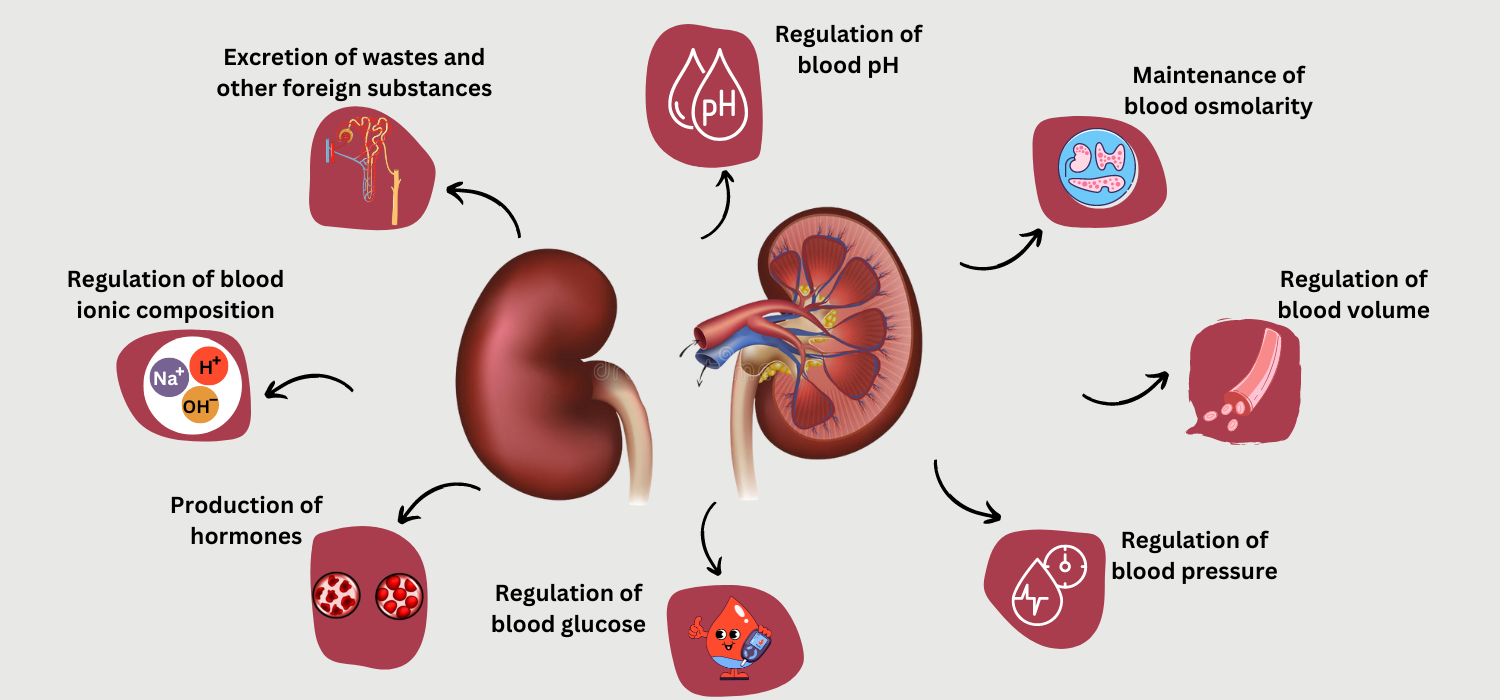
The kidneys are vital organs responsible for multiple functions that ensure the body's internal stability and overall health. Here is a detailed breakdown of their primary roles:
1. Excretion of Wastes and Foreign Substances
The kidneys filter waste products like urea, creatinine, and ammonia from the blood. These substances are by-products of protein metabolism and must be eliminated to prevent toxicity. Additionally, the kidneys remove foreign substances, including drugs and environmental toxins, through urine.
2. Regulation of Blood pH
The kidneys help maintain the body's acid-base balance by excreting hydrogen ions (H⁺) into the urine and reabsorbing bicarbonate (HCO₃⁻) into the blood. This ensures the blood pH remains within the normal range of 7.35–7.45, which is essential for enzyme function and cellular activities.
3. Maintenance of Blood Osmolarity
By regulating the concentration of solutes in the blood, such as sodium and chloride, the kidneys maintain proper osmolarity. This function prevents cells from swelling or shrinking due to imbalances in water and solute levels.
4. Regulation of Blood Volume
The kidneys control blood volume by adjusting the amount of water reabsorbed into the bloodstream or excreted as urine. This regulation is crucial for maintaining adequate blood circulation and hydration levels.
5. Regulation of Blood Pressure
Through the renin-angiotensin-aldosterone system (RAAS), the kidneys play a vital role in blood pressure control. Renin, an enzyme released by the kidneys, triggers a cascade of hormonal reactions that regulate blood vessel constriction and sodium retention, directly impacting blood pressure.
6. Regulation of Blood Ionic Composition
The kidneys balance essential ions in the blood, such as sodium (Na⁺), potassium (K⁺), calcium (Ca²⁺), magnesium (Mg²⁺), and chloride (Cl⁻). Proper ionic balance is necessary for nerve signaling, muscle contraction, and various metabolic processes.
7. Production of Hormones
The kidneys produce and secrete hormones essential for various physiological functions:\n - Erythropoietin (EPO): Stimulates red blood cell production in the bone marrow.\n - Renin: Regulates blood pressure and fluid balance.\n - Calcitriol: The active form of vitamin D, which aids in calcium absorption and bone health.
8. Regulation of Blood Glucose
The kidneys contribute to glucose homeostasis by reabsorbing glucose from the filtrate back into the blood. Additionally, during prolonged fasting or low glucose levels, they perform gluconeogenesis, producing glucose from non-carbohydrate sources.